
Employers get
a technician who can maintain, fault-find and repair the mechanical part of your plant, equipment and systems, involving anything from pumps, valves and gearboxes to pneumatic and hydraulic systems. They will carry out planned, preventative and reactive maintenance to keep your operation running.
Learners get
a Level 3 qualification that is recognised by both the Institution of Engineering and Technology (IET) and the Institution of Mechanical Engineers (IMechE), opening doors to sectors including energy, manufacturing, processing, utilities and leisure and entertainment.
Key information
LEVEL - Level 3
DURATION - Typically 42 months to gateway, plus four months for end-point assessment
QUALIFICATION - Level 3 Engineering Apprenticeship - Engineering Maintenance Technician, Electrical (ST1426)
FUNDING BAND - £27,000
Engineering maintenance technicians keep plant, equipment and systems running.
This apprenticeship trains candidates to carry out planned and preventative maintenance to stop problems occurring, and respond to issues when they do.
Apprentices are evaluated by an independent end-point assessor against the occupational standard. There's no mandatory qualification attached to this standard, but employers who want additional certificated evidence can add a formal Pearson BTEC Diploma or EAL NVQ at an extra cost.
The standard carries professional recognition with both the IET and the IMechE for Engineering Technician (EngTech) status.
Make UK is the national body for UK manufacturing, and our Tech Hub in Aston trains engineering apprentices for employers of all sizes.
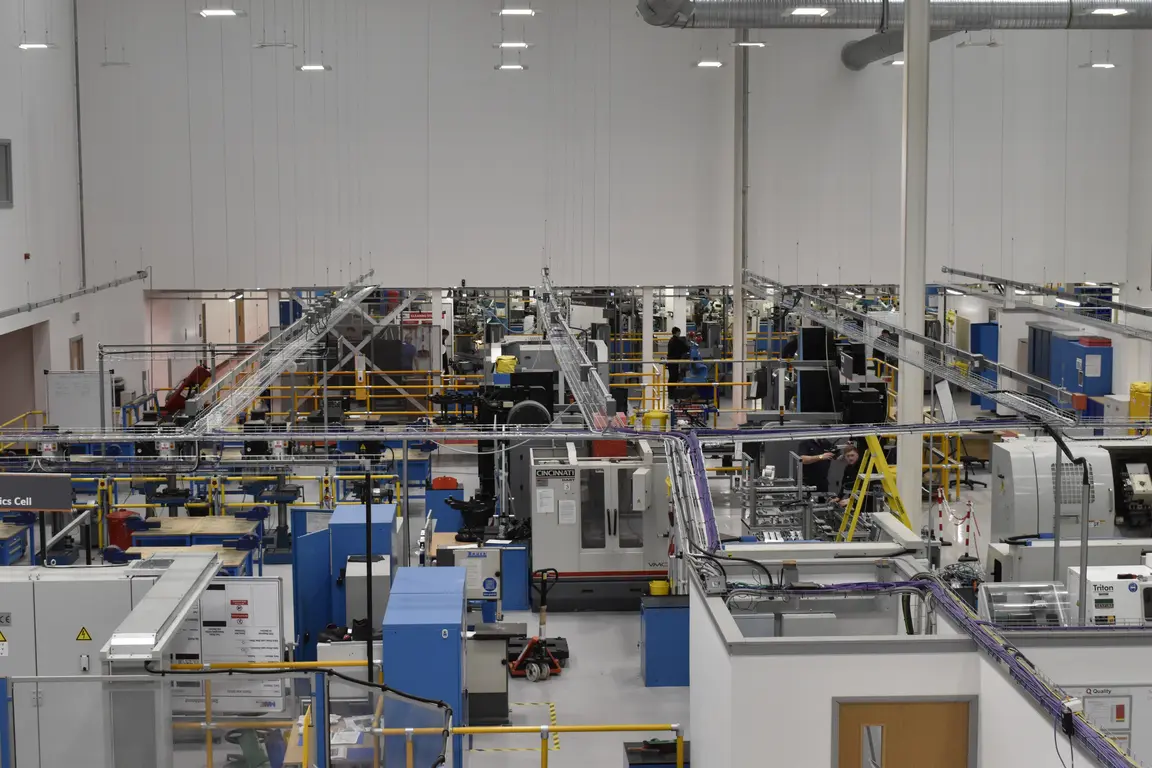
Training happens in a purpose-built facility with industry-experienced tutors, rated 4.8 on Trustpilot and Ofsted Grade 2, working with employers of every size and sector.
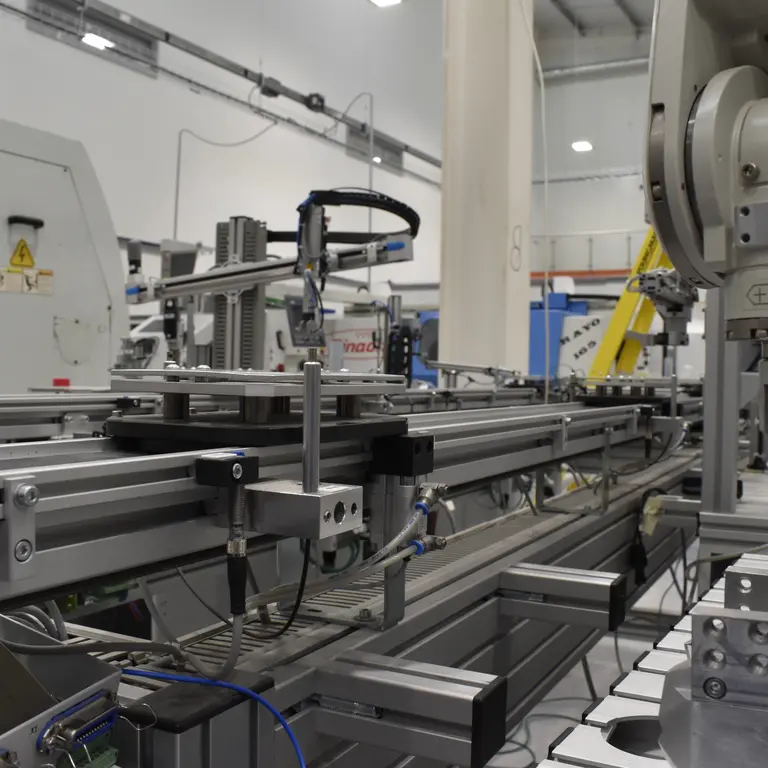
And if you'd like to see the equipment and facilities behind this training for yourself, take a look at the Tech Hub.
FAQs
A technician trained through Make UK can maintain workplace health, safety and environmental compliance by carrying out risk assessments and following emergency procedures.
They can liaise with seniors on maintenance work and run pre-job briefings, plan and coordinate work with other maintenance disciplines and provide technical and regulatory advice.
Technicians can prepare for maintenance work, organise resources and parts, and review job requirements safely, including working to a safe system of work or permit to work.
They can ensure work meets regulatory, industry and company quality standards, complete jobs correctly with a proper sign-off and handover, and create accurate maintenance records, from job reports to fault-finding reports.
On the mechanical side, they can carry out planned, preventative and reactive maintenance on mechanical plant, equipment and systems, diagnose faults and solve problems, and remove and replace mechanical components.
They can inspect, examine and test mechanical plant, manufacture or assemble components such as bespoke gaskets, and keep maintenance tools and equipment available and performing.
Technicians also help improve processes by supporting safer, more reliable, more sustainable or more efficient ways of working, and keep developing their own skills through continued professional development.
Technicians trained to this standard can work alone or as part of a team, typically reporting to an experienced maintenance engineer.
They work closely with other technicians, engineers and support operatives, plus operations, quality and, where relevant, auditors, regulators and customers on site visits.
This standard applies across energy, manufacturing, processing, utilities, and leisure and entertainment businesses.
Typical job titles: Mechanical craftsperson, mechanical maintenance technician, engineering maintenance technician, engineering technician, maintenance engineering technician, maintenance technician, maintenance and operations engineering technician, control and instrumentation maintenance technician, control, instrumentation and automation technician, control and instrumentation craftsperson, electrical craftsperson, electrical maintenance technician.
As an engineering maintenance technician apprentice, you'll spend most of your time in the workplace, applying what you're learning to real maintenance tasks on live plant and equipment.
You'll attend the Make UK Technology Hub in Aston for practical training in skills including: statutory regulations and safety, working efficiently in engineering, using and communicating technical information, business improvement, hand fitting, maintaining mechanical devices and equipment, maintaining fluid power equipment, wiring and testing electrical equipment and circuits, producing mechanical assemblies, and fault location on system equipment.
By the time you finish, you'll be able to safely maintain, fault-find and repair mechanical plant, read and interpret drawings and specifications, and apply core mechanical principles including stress, strain, bending moment, heat transfer and fluid dynamics.
You'll also be confident working with pneumatic and hydraulic systems, applying bench fitting techniques, and carrying out the isolation and deisolation procedures that keep maintenance work safe.
Employers who want additional formal certification can also add a Pearson BTEC Level 3 Diploma in Advanced Manufacturing Engineering or an EAL Level 3 NVQ Diploma in Engineering Maintenance (mechanical pathway). The NVQ is assessed entirely in the workplace across years two to four, with no further time needed at the Technology Hub.
Technicians move into senior and lead maintenance roles, specialist mechanical positions, maintenance engineering, and further study.
The programme typically takes 42 months to gateway, plus a further four months for end-point assessment. Exact timings depend on prior experience, occupational role and assessment of prior learning and knowledge.
Training is split between your workplace and structured practical skills training at the Make UK Technology Hub, mapped directly to the standard's knowledge, skills and behaviours.
Your employer decides when you're ready for the gateway. You'll need to confirm you're ready for EPA, have achieved English and maths in line with the apprenticeship funding rules, and submit a portfolio of evidence.
End-point assessment typically takes four months, delivered through City & Guilds, and consists of three parts: an observation with questions, an interview underpinned by your portfolio and a multiple-choice test.
The observation and interview are each graded Fail, Pass or Distinction, while the multiple-choice test is graded Fail or Pass. Your overall apprenticeship grade is Fail, Pass or Distinction.
This qualification is for new entrants starting out in mechanical maintenance, and no prior experience is expected.
Apprentices who are practical, methodical and comfortable working on live plant and rotating equipment will get a strong grounding in keeping complex machinery running.
Applicants will need four GCSEs at grade 4 or above, including maths, plus English at grade 4 or above. Anyone with English below grade 4 will need at least a grade 3, and if they're under 18 at enrolment, they'll continue studying English and work towards Level 2 Functional Skills within their first year.
The Engineering Maintenance Technician (Mechanical) – Level 3 apprenticeship is government-funded through the apprenticeship levy. The funding band for this programme is £27,000.
If your business pays into the Growth and Skills Levy, training costs are drawn from your levy account.
If your payroll is under £3 million a year, you don't pay the levy. The government covers 95% of training costs and you contribute 5% of the training fee plus the apprentice's wage, which must be in line with the national apprenticeship wage.
The optional BTEC Diploma and optional EAL NVQ each carry their own registration and certification cost, agreed with your employer separately and invoiced in the first year, as they aren't covered by the levy.
Find out more about how funding works here.
Ready to take the next step?
For employers
Keeping a mechanical plant running is different for every business, so talk to us about your business and taking on a mechanical maintenance apprentice.
Want to know what's actually involved? Read how it works for employers, covering everything from your first enquiry to your apprentice's first week on site.
Or see it in action for yourself by arranging a visit to our Technology Hub in Aston and putting your questions to us directly.
If you're still weighing up whether an apprenticeship is right for your business, see why employers take on apprentices.
For learners
Convinced that a career in mechanical maintenance is for you? Find out how to apply and what happens at each stage.
Want to know what life at the Technology Hub is really like? Read what current apprentices have to say.
Not sure mechanical is the right fit? Browse our other programmes to find one that is.
If you're a learner deciding whether this route is for you, read why an apprenticeship could work for you.