
Employers get
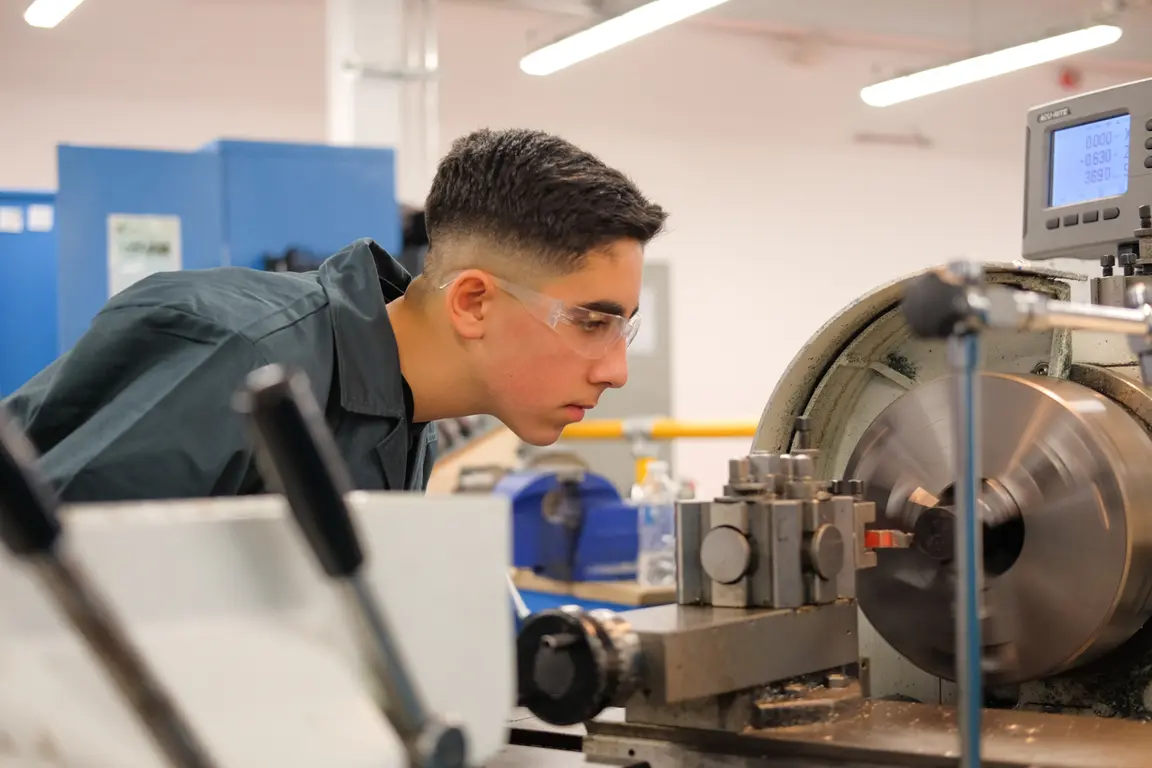
a technician who can set up, operate and adjust conventional or CNC machine tools to produce complex, precision components. They’ll interpret drawings and specifications, perform machining to tight tolerances and inspect their own work to keep it on spec.
Learners get
a Level 3 qualification that opens the door into precision machining roles across manufacturing, working with everything from centre lathes to CNC machining centres.
Key information
LEVEL - Level 3
DURATION - Typically 42 months, plus a further three months for end-point assessment
QUALIFICATION - Level 3 Engineering Apprenticeship - Machining Technician (ST1305)
FUNDING BAND - £27,000
Machining technicians turn raw materials into complex, precision components, using conventional or CNC machine tools.
Apprentices complete a mandatory Pearson BTEC Level 3 Diploma in Advanced Manufacturing Engineering (Machining) and are evaluated by an independent end-point assessor. The gateway also recognises equivalent qualifications, including the EAL Level 3 Extended Diploma in Machining and the City & Guilds Machining Technician award.
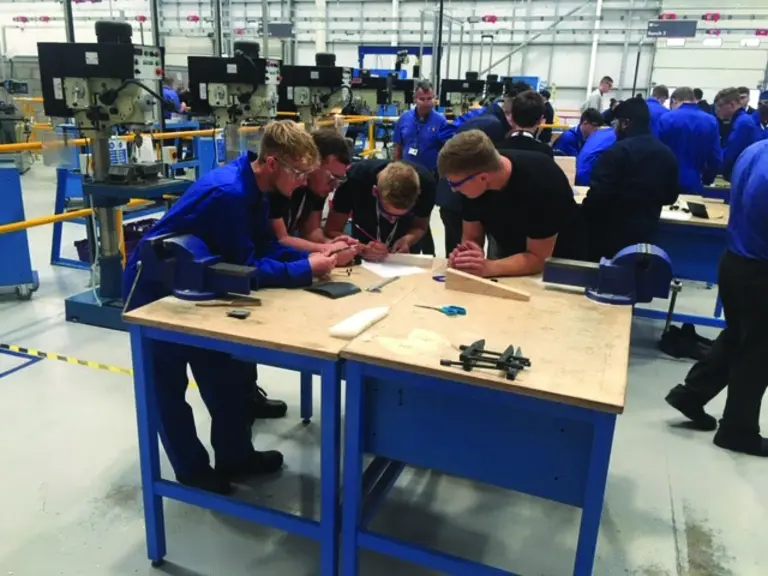
Make UK is the national body for UK manufacturing, and our Tech Hub in Aston trains engineering apprentices for employers of all sizes.
Training happens in a purpose-built facility with industry-experienced tutors, rated 4.8 on Trustpilot and Ofsted Grade 2, working with employers of every size and sector.
And if you'd like to see the equipment and facilities behind this training for yourself, take a look at the Tech Hub.
FAQs
A technician trained through Make UK can carry out safety checks and performance monitoring on machining equipment, and interpret engineering data, drawings and technical documentation to contribute to the day’s machining schedule.
They can inspect materials before machining, identify and report issues such as incorrect grades, dimensions or thicknesses and plan the sequence for machining activities, selecting the correct tooling, work-holding and materials for conventional or CNC work.
They can set up, operate, adjust or edit machining equipment settings and programmes, and machine high-quality complex components using a broad range of processes, including thread cutting, slots and pockets, undercutting, profile forms, tapered and eccentric diameters, bored holes and tee slots.
They can inspect the components they produce and adjust equipment, programmes or tooling to keep quality on spec, and report any issues affecting quality, quantity or deadlines.
They can complete machining documentation from standard operating procedures to contributing to audits, and maintain the machining work area, with proper housekeeping and waste management.
They can keep customers, colleagues and line managers informed about machining work, carry out scheduled daily inspections and safe machine shutdown or isolation, and support continuous improvement activity to address business problems.
Technicians typically work as part ocross-functional team, reporting to an engineering or manufacturing team leader, and may interact with customers, suppliers, quality auditors and regulators. Depending on the role, some work involves working at height or on shifts.
Typical job titles: Machinist, machining technician, precision engineer, CNC machinist, CNC machinist programmer, centre lathe turner, CNC centre lathe turner, gear cutter, gear cutter and grinder, CNC gear cutter, CNC gear cutter and grinder, horizontal borer, CNC horizontal borer, conventional vertical borer, CNC vertical borer, EDM machinist technician, CNC EDM machinist technician, manual machinist (miller, turner or grinder), CNC machinist (miller, turner or grinder).
As a machining technician apprentice, you'll spend most of your time in the workplace, applying what you're learning to real machining tasks.
You'll attend the Make UK Technology Hub in Aston for the mandatory Pearson BTEC Level 3 Diploma in Advanced Manufacturing Engineering (Machining), covering general machining, fitting and assembly, engineering materials, CNC programming, precision grinding, engineering drawing, mechanical principles, and mechanical measurement and inspection techniques.
In your first year, you'll also complete practical skills training including business improvement activities, building the foundation you'll need before specialising.
By the time you finish, you'll be able to set up, operate and adjust conventional or CNC machines, machine complex components to precise tolerances, and inspect and adjust your own work to keep it on spec.
Employers can add specialist appreciation weeks in turning, pneumatics, MIG welding, CNC, milling, electronics, hydraulics or robotics, broadening an apprentice's exposure at an additional cost per module.
Employers who want fuller, formally assessed competence evidence can also opt into an EAL Level 3 NVQ Diploma in Mechanical Manufacturing Engineering, choosing either the Machining or CNC Machining pathway. This isn't a mandatory part of the standard, doesn't require further time at the Technology Hub, and is assessed in the workplace across years two to four, for an additional registration and certification cost.
Machining technicians progress into senior machinist roles, CNC programming specialisms, precision engineering positions, and further study.
The programme typically takes 42 months, plus a further three months for end-point assessment. Exact timings depend on prior experience, occupational role and any relevant assessment of prior learning and knowledge.
Training is split between your workplace and time at the Make UK Technology Hub working towards the mandatory qualification.
Before moving to gateway, your employer must confirm you're working at or above the occupational standard. You'll need to confirm you're ready for EPA, have achieved English and maths in line with the apprenticeship funding rules, have passed your mandatory machining qualification, and submit a portfolio of evidence drawn from real job packs. For the practical assessment, your employer and the assessment provider will agree in advance which machines and components you'll be assessed on, so the right materials and equipment are ready.
End-point assessment typically takes three months and consists of three parts: a practical demonstration with questions, an interview underpinned by your portfolio, and a knowledge test.
The practical demonstration is graded Fail or Pass. The interview and knowledge test are each graded Fail, Pass or Distinction. Your overall apprenticeship grade is Fail, Pass, Merit or Distinction.
This qualification is for new entrants starting out in precision machining, and no prior experience is expected.
Apprentices who are precise, patient and comfortable working to tight tolerances on complex components will get a strong grounding across conventional and CNC machining.
Applicants will need four GCSEs at grade 4 or above, including maths, plus English at grade 4 or above. Anyone with English below grade 4 will need at least a grade 3, and if they're under 18 at enrolment, they'll continue studying English and work towards Level 2 Functional Skills within their first year.
The Machining Technician Level 3 apprenticeship is government-funded through the apprenticeship levy, with a funding band for this programme of £27,000.
If your business pays into the Growth and Skills Levy, training costs are drawn from your levy account.
If your payroll is under £3 million a year, you don't pay the levy. The government covers 95% of training costs and you contribute 5% of the training fee plus the apprentice's wage, which must be in line with the national apprenticeship wage.
Optional appreciation weeks are charged separately, at £950 per module, and are agreed with your employer before the programme starts.
The optional EAL Level 3 NVQ carries its own registration and certification cost, agreed with your employer separately and invoiced in the first year, as it isn't covered by the levy.
Find out more about how funding works here.
Ready to take the next step?
For employers
If precision machining is a skill your business requires, let's talk about your workforce needs and how taking on a machining apprentice works in practice.
Want the full picture first? Here's how it works for employers, from your first conversation with us to your apprentice's first day on the shop floor.
Or see the machines and the training in person by visiting our Technology Hub in Aston and get your questions answered on the spot.
If you're still weighing up whether an apprenticeship is right for your business, see why employers take on apprentices.
For learners
Keen to begin a career in precision engineering? Here's how to apply and what happens next.
Curious what a normal week at the Technology Hub looks like? Hear directly from apprentices already on the programme.
Machining not quite your thing? Have a look through our other programmes instead.
If you're a learner deciding whether this route is for you, read why an apprenticeship could work for you.