
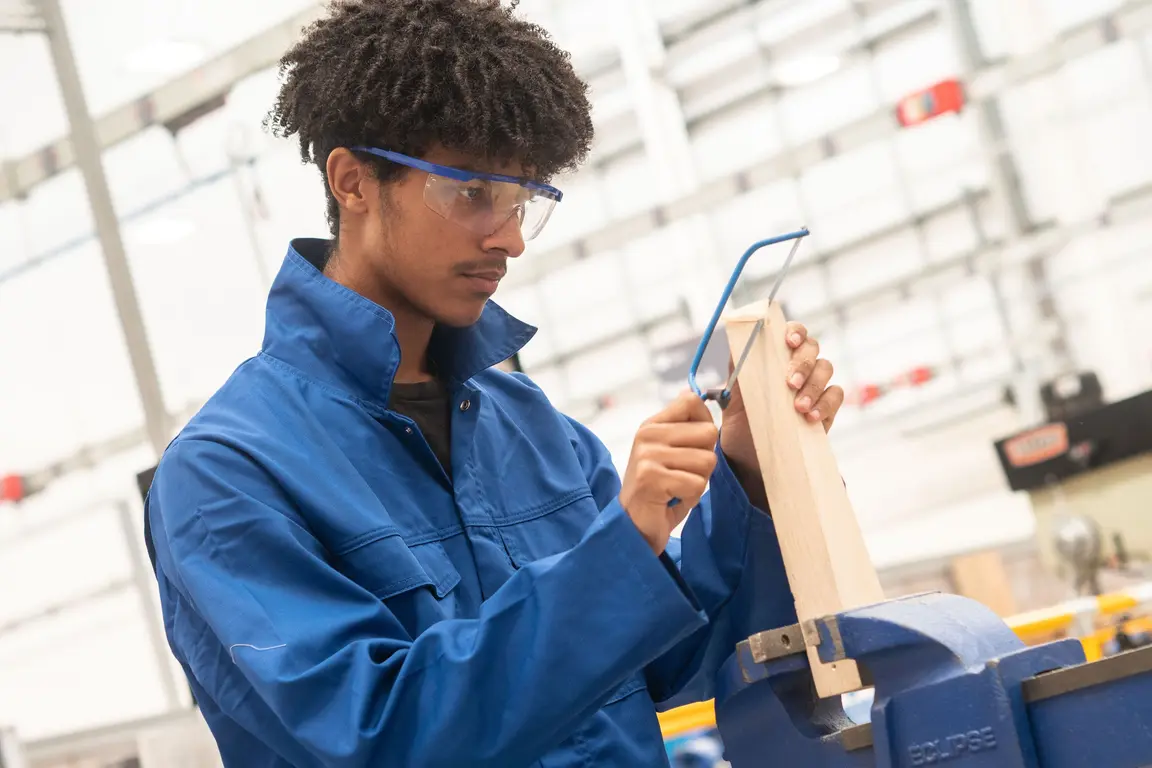
Employers get
a technician who can manufacture, assemble, repair and maintain the tooling, dies, jigs and fixtures that keep your production running. They’ll read complex drawings, operate CNC and precision machinery, and test and adjust their work to exact specification.
Learners get
a Level 3 qualification in one of engineering's most specialist trades, working on tooling behind products used in transport, energy, defence, food, packaging and healthcare, including medical devices and implants.
Key information
LEVEL - Level 3
DURATION - Typically 42–48 months
QUALIFICATION - Level 3 Engineering Apprenticeship - Toolmaker and Tool & Die Maintenance Technician (ST0457)
FUNDING BAND - £26,000
Toolmakers and tool & die maintenance technicians do some of the most highly skilled, precise work in manufacturing.
They produce and maintain the tooling used to make everything from car parts to joint replacements.
There’s three stages on the way towards qualification, including foundation competence, development technical knowledge and development competence.
Apprentices are evaluated through a portfolio of evidence and a technical interview as part of end-point assessment.
Make UK is the national body for UK manufacturing, and our Tech Hub in Aston trains engineering apprentices for employers of all sizes.
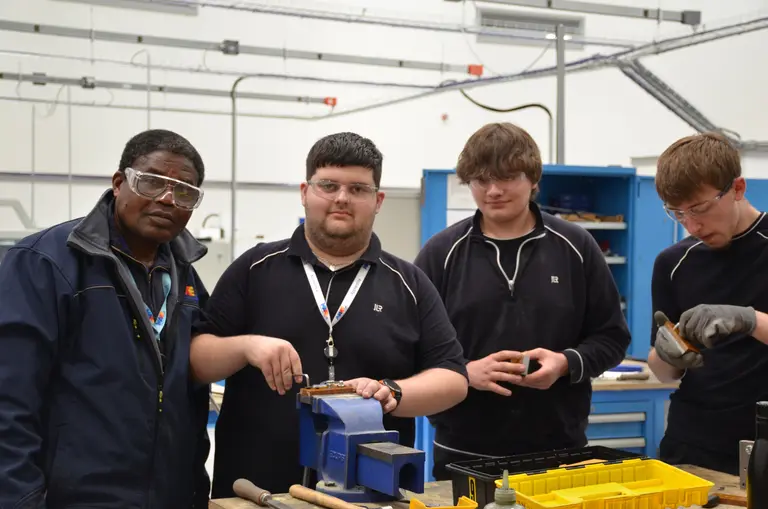
Training happens in a purpose-built facility with industry-experienced tutors, rated 4.8 on Trustpilot and Ofsted Grade 2, working with employers of every size and sector.
And if you'd like to see the equipment and facilities behind this training for yourself, take a look at the Tech Hub.
FAQs
A technician trained through Make UK can read and interpret data and documentation to produce or maintain tool and die components, assemblies and systems. They can also apply the methods and techniques needed to produce, assemble, disassemble, repair or maintain tools, dies, jigs and fixtures to your requirements.
They can manufacture components such as tooling, dies, jigs and fixtures, and carry out testing to confirm correct operation and the effectiveness of any repairs or maintenance work.
Technicians can undertake equipment and asset care, including planned preventative maintenance, and carry out complex fault diagnosis and repair across mechanical, fluid and pneumatic power, electrical and electronic, and process control equipment.
They can safely operate a wide range of hand tools such as grinders, drills and stones, and complex workshop machinery including CNC lathes, milling, grinding and erosion machining centres, drilling and welding equipment. They understand how pneumatic, hydraulic, electrical and electronic systems apply to moulding, injection and pressing machinery.
They also contribute to the business by identifying opportunities to improve working practices, processes or procedures.
Technicians trained to this standard work individually or as part of a manufacturing team, with minimum supervision, taking responsibility for the quality and accuracy of their work and proactively finding solutions to problems.
Tooling made and maintained to this standard underpins products used every day, in transport (cars, planes, boats and rail), energy, defence, food, clothing, packaging and health, including medical equipment and implants such as joint replacements.
Typical job titles: Toolmaker, tool & die maintenance technician.
As a toolmaker apprentice, you'll spend most of your time in the workplace, applying what you're learning to real tooling and die work.
You'll attend the Make UK Tech Hub in Aston to work towards three mandatory qualifications. First, a Level 2 Diploma in Advanced Manufacturing Engineering, covering safety and regulations, working efficiently, technical information, business improvement, hand fitting, lathes, milling machines, CNC programs, grinding machines and producing tool and die assemblies.
Alongside this, you'll work towards a Level 3 Diploma in Advanced Manufacturing Engineering covering technical knowledge like health and safety, communications, maths, materials, mechanical principles, engineering drawing, CNC applications, maintenance procedures, fault diagnosis, mechanical measurement and inspection, electrical and electronic principles, and Industry 4.0.
Finally, you'll complete a Level 3 Diploma in Advanced Manufacturing and Engineering specific to toolmaking, choosing a pathway with your employer: Toolmaker (assembling press, injection mould, blow mould or vacuum forming tools, or dies, and producing toolroom components using CNC machines), Mould, Tool and Die Equipment Maintenance (fault diagnosis and maintenance on mould, press tool or die equipment), or Jig and Fixture Manufacture (producing, assembling and repairing jigs and fixtures).
If you don't already have English and maths at Level 2, you'll need to achieve this before you can take your end-point assessment.
Employers can add specialist appreciation weeks in mechanical, pneumatics, MIG welding, CNC, electrical, electronics, hydraulics or robotics, broadening an apprentice's exposure at an additional cost per module.
This is one of the most in-depth qualifications on offer. Toolmakers progress into senior toolroom roles, specialist die, mould or jig positions, tooling engineering, and further study.
Programme structure and assessment
The programme typically takes 42 to 48 months. Exact timings depend on prior experience, occupational role and any relevant Assessment of Prior Learning and Knowledge.
Training is split between your workplace and time at the Make UK Tech Hub, working towards your Foundation Competence, Development Technical Knowledge and Development Competence qualifications, all of which are mandatory to complete the standard. Your employer selects the most relevant pathway and unit options at each stage to match your role.
End-point assessment is delivered through a portfolio of evidence and a technical interview (viva), with involvement from a professional engineering institution.
This qualification is for new entrants starting out in one of engineering's most specialist trades, and no prior experience is expected.
Apprentices who are precise, patient and comfortable working on complex machinery and fine tolerances will get a thorough grounding in manufacturing and maintaining tooling, dies, jigs and fixtures.
Applicants will need four GCSEs at grade 4 or above, including maths, plus English at grade 4 or above. Anyone with English below grade 4 will need at least a grade 3, and if they're under 18 at enrolment, they'll continue studying English and work towards Level 2 Functional Skills within their first year.
The Toolmaker and Tool & Die Maintenance Technician – Level 3 apprenticeship is government-funded through the apprenticeship levy. The funding band for this programme is £26,000.
If your business pays into the Growth and Skills Levy, training costs are drawn from your levy account.
If your payroll is under £3 million a year, you don't pay the levy. The government covers 95% of training costs and you contribute 5% of the training fee plus the apprentice's wage, which must be in line with the national apprenticeship wage.
Optional appreciation weeks are charged separately, at £950 per module, and are agreed with your employer before the programme starts.
Find out more about how funding works here.
Ready to take the next step?
For employers
Precision tooling skills are hard to find, so if this is a gap in your business, talk to us about what a toolmaker apprenticeship could look like for you.
For the full picture, take a look at how the process works for employers, from your first conversation with us to your apprentice's first day.
Better yet, come and see the workshop for yourself. Visit our Tech Hub in Aston and put your questions to us in person.
If you're still weighing up whether an apprenticeship is right for your business, see why employers take on apprentices.
For learners
Interested in a career shaping the tools behind everything from cars to medical devices? Here's how to apply and what to expect.
Want to know what training here actually involves? Hear from apprentices already working towards this qualification.
If toolmaking isn't quite the right fit, take a look at our other programmes.
If you're a learner deciding whether this route is for you, read why an apprenticeship could work for you.