
The Engineering Manufacturing Technician apprenticeship
The Engineering Manufacturing Technician apprenticeship is a Level 4 programme that trains people to provide specialist technical support for engineers. They analyse data, solve problems, and produce the documentation that keeps manufacturing on quality, cost and delivery targets. It's a progression route for people who already hold a relevant Level 3 qualification, and typically takes around 39 months including end-point assessment.
Employers get
a technician who can analyse data, solve complex problems, and produce the technical documentation and reports that keep quality, cost and delivery on target. Someone who bridges the gap between specialist engineers and the production floor.
Learners get
a Level 4 qualification recognised by the Engineering Council, the IMechE and the Royal Aeronautical Society, opening doors into quality, costing, process improvement and new product introduction roles across some of the UK's most demanding manufacturing sectors.
Key information
LEVEL - Level 4
DURATION - Typically 36 months, plus three months for end-point assessment
QUALIFICATION - Level 4 Engineering Apprenticeship – Engineering Manufacturing Technician (ST0841)
FUNDING BAND - £21,000
Engineering manufacturing technicians provide the specialist technical support that lets engineers get on with engineering.
Their work involves gathering and analysing data, solving problems, and producing the documentation that tells people what needs to happen next, from how a product is made to how it's tested, modified or maintained.
Nationally, the sector needs to recruit around 124,000 engineers and technicians every year, and this standard trains people to help fill that gap in technical support roles.
Apprentices complete a mandatory Level 4 HNC, choosing the pathway – mechanical, manufacturing, or electrical and electronic engineering – that best matches their role, and are evaluated by an independent end-point assessor. The standard carries professional recognition with the Engineering Council, the Institution of Mechanical Engineers and the Royal Aeronautical Society, all for Engineering Technician status.
Make UK is the national body for UK manufacturing, and our Tech Hub in Aston trains engineering apprentices for employers of all sizes.
Training is delivered by industry-experienced tutors, and Make UK is rated 4.8 on Trustpilot and Ofsted Grade 2, working with employers including JLR, Rolls-Royce and Severn Trent.
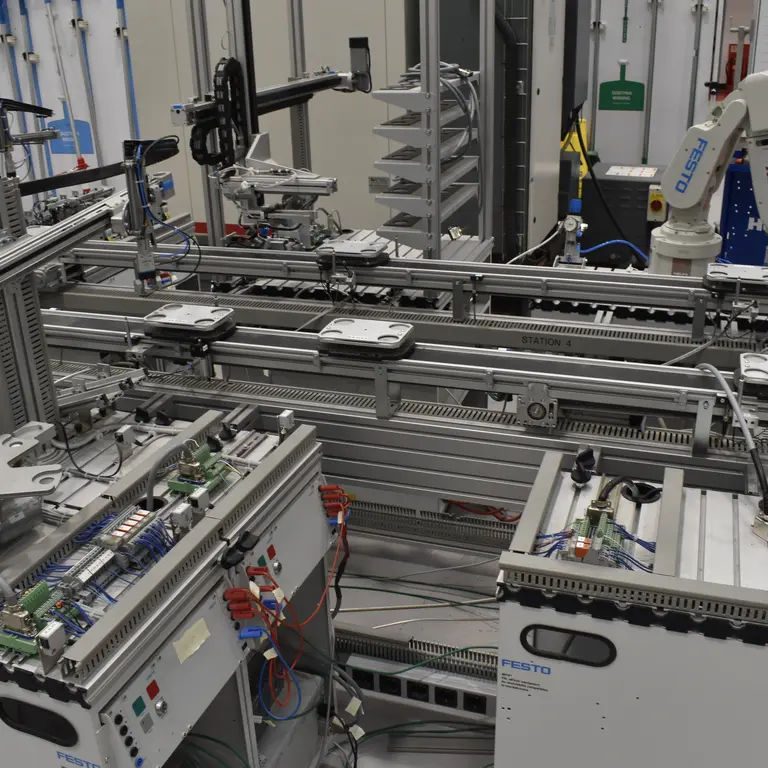
And if you'd like to see the equipment and facilities behind this training for yourself, take a look at the Tech Hub.
FAQs
A technician trained through this standard can ensure the safe and efficient performance of production tasks, complying with company procedures, approved engineering data and health and safety requirements, and support risk assessments and safe systems of work.
They can prepare product and process documentation by collecting, analysing and summarising information and trends, and manage internal and supplier quality notifications, liaising with the right people to get them resolved.
They can liaise with internal and external customers to implement programme initiatives, including lean methods and tools, and support new product introduction or product modifications – contributing to quality activities, testing and commissioning, supplier approvals and gate reviews.
They can deliver financial planning and costing analysis, from cost estimates and quotations to calculating the cost impact of a quality problem or machine downtime, and contribute to new technology initiatives, including justifying capital investment from purchase through to installation and commissioning.
They can produce and maintain reports measuring key performance indicators, and work to make engineering and manufacturing processes more efficient and cost-effective, using tools such as time and motion analysis and line balancing.
They can liaise with stakeholders – production managers, production operatives, auditors, suppliers, customers – to keep engineering and manufacturing operations on schedule, and ensure work complies with local, national and international regulatory requirements, including aerospace regulatory bodies where relevant.
They can resolve engineering and manufacturing problems through root-cause analysis and corrective action, produce documentation such as build manuals, standard operating instructions and bills of materials, and review methods to find the most effective and economical way to meet a drawing or specification.
Technicians trained to this standard typically split their time between an office environment and the shop floor, or visiting customers and suppliers, working with production teams at an operational level and with specialist quality or design engineers, and reporting to an engineering or manufacturing manager.
This standard applies across large and small engineering and manufacturing organisations, in sectors including automotive, aerospace and airworthiness, chemical processing, land systems, marine, maritime defence, materials manufacturing, and their supply chains.
Typical job titles: Manufacturing quality engineer, manufacturing production engineer, manufacturing procurement engineer, quality engineer, costing engineer, test and commissioning engineer, installation engineer, process engineer, production support
engineer.
As an engineering manufacturing technician apprentice, you'll spend your time split between the workplace and studying towards a mandatory Level 4 HNC.
Your employer chooses the HNC pathway that matches your role:
- Mechanical engineering: Covering engineering design, maths, mechanical principles, fluid mechanics, thermodynamics and heat engines,
- Manufacturing engineering: Covering CAD/CAM, Industry 4.0 and industrial robots,
- Electrical and electronic engineering: Covering automation, robotics and programmable logic controllers, electrical and electronic principles and electrical machines.
All three pathways also include engineering design, engineering maths, managing a professional engineering project, production engineering for manufacture and quality and process improvement.
A maths assessment during induction identifies whether you'll need bridging work before the HNC starts, so you're set up to succeed from day one.
Off-the-job training makes up more than six hours a week of your apprenticeship throughout the programme.
Engineering manufacturing technicians move into senior technical, quality or project roles, and the standard's professional recognition supports further progression towards Incorporated Engineer status.
The programme typically takes 36 months, plus a further three months for end-point assessment. Exact timings depend on prior experience, occupational role and any relevant assessment of prior learning and knowledge.
The EPA period only starts once your employer is satisfied you're consistently working at or above the level set out in the occupational standard – they can take advice from your training provider, but the decision is theirs alone. Before beginning EPA, you'll also need to have achieved English and maths in line with the apprenticeship funding rules, and passed
your mandatory Level 4 HNC.
End-point assessment typically takes three months and consists of two parts: an observation with questioning, and a professional discussion supported by a portfolio of evidence. Your overall apprenticeship grade is Fail, Pass or Distinction.
Unlike our Level 2 and Level 3 standards, this apprenticeship isn't a new-entrant route. It's for people who already hold a relevant Level 3 qualification and are ready to move into a more technical, analytical engineering role.
Entry requires one of: a Level 3 apprenticeship in an engineering-related standard, a Merit or above in a Level 3 BTEC Diploma in an engineering-related subject, a T Level Pass with a D grade or above in core subjects in an engineering-related subject, two GCE A Levels at grade D or above including Maths and/or a Science, or an Access to Higher Education Diploma or Certificate in Engineering or Science – plus GCSE grade 4 in Maths and grade 4 in English Literature and/or English Language.
Apprentices who are analytical, methodical and comfortable moving between data, documentation and the shop floor will get the most out of this standard.
The Engineering Manufacturing Technician – Level 4 apprenticeship is government-funded through the apprenticeship levy. The funding band for this programme is £21,000.
If your business pays into the Growth and Skills Levy, training costs are drawn from your levy account.
If your payroll is under £3 million a year, you don't pay the levy. The government covers 95% of training costs and you contribute 5% of the training fee plus the apprentices wage, which must be in line with the national apprenticeship wage.
Find out more about how funding works here.
Ready to take the next step?
For employers
If you've got someone with real potential ready to move beyond a Level 3 qualification, get in touch below and we'll talk through whether this is the right next step for them.
Keen to understand the process end to end? Read how it works for employers before you commit to anything.
Prefer to see it in person? Arrange a visit to our Tech Hub in Aston and bring your questions with you.
If you're still weighing up whether an apprenticeship is right for your business, see why employers take on apprentices.
For learners
Already got a Level 3 qualification under your belt and want to go further? Find out how to apply.
Curious what training here is actually like day to day? Hear it from apprentices already on the programme.
Think a different standard might suit you better? Browse our other programmes.
If you're a learner deciding whether this route is for you, see why an apprenticeship could work for you.
Need more text for here