
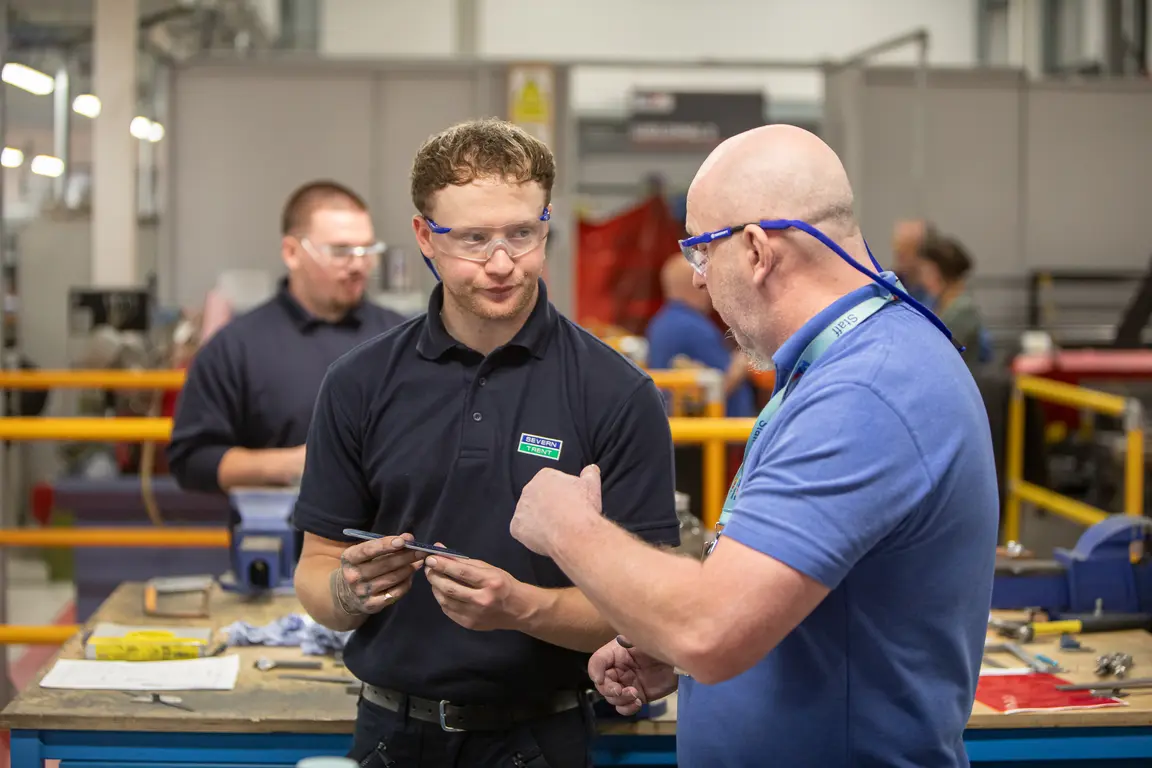
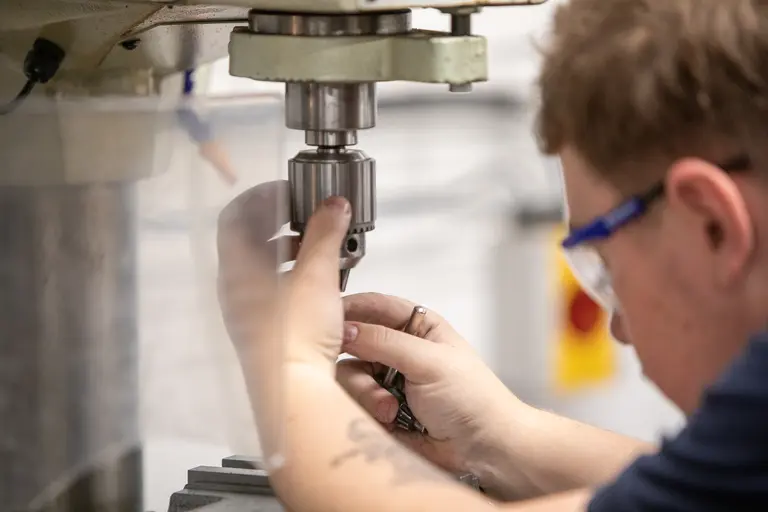
Every piece of modern technology we rely on has been created and built by engineers, from smartphones to aircraft and electric vehicles to life-saving medical equipment.
It’s a career for people with a questioning mind. For those who aren’t happy with average and want to find a better way to do things.
Do you have the ability to make things happen? To turn an idea into something that really works?
If you loved playing with Lego bricks or making things when you were younger, you might be right for a career in engineering.
Make UK is the national body for UK manufacturing, and we count thousands of engineers and engineering companies among our members. We train hundreds of apprentices every year for some of the biggest companies in the country.
We're rated 4.8 on Trustpilot and hold a Grade 2 Ofsted rating, and our tutors have spent years working in the industry before teaching it.
Where could engineering actually take me?
An engineering apprenticeship is the beginning – not the end. Make UK apprentices go on to become specialists, team leaders, managers, researchers and even directors.
Many keep learning after completing their apprenticeship and work towards higher qualifications.
Richard Sadler is a great example of just how far an apprenticeship can take you. He started out at 18, learning the fundamentals of engineering like milling, turning, welding and CAD.
Over two decades later he’s Group Engineering Director at Sertec, a major automotive manufacturer supplying Jaguar Land Rover.
His apprenticeship started a career that led him to the boardroom.
What does engineering involve day to day?
It depends where you end up, as engineers are key to almost every industry – including water, aerospace, automotive, logistics, research and food production.
One engineer might be fixing the machinery that keeps a city’s water supply clean, another might be welding parts that will end up in a passenger jet.
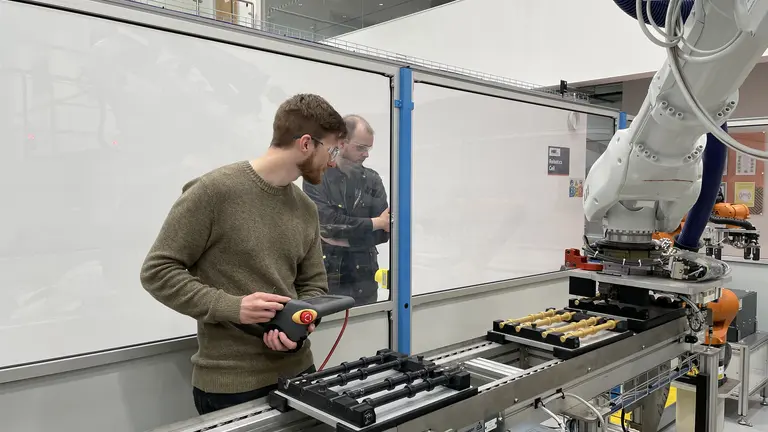
You could be using the mechanical or electrical skills you learn, or relying on high-tech equipment like AI, robotics or computer-controlled machines (CNC machines) to cut or shape products.
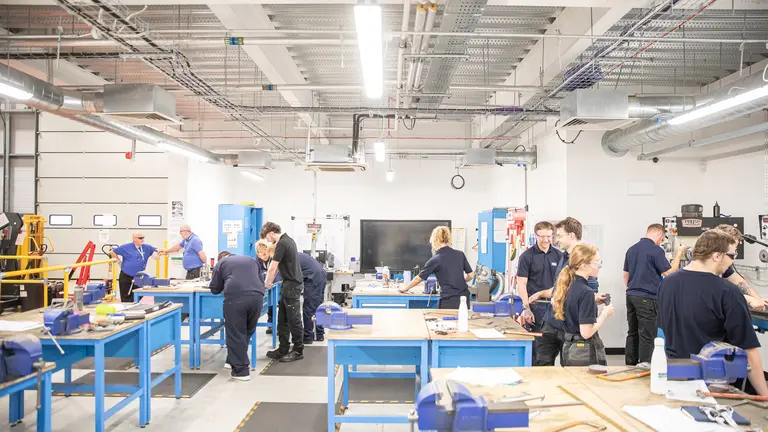
Apprentices learn how to use industrial equipment at Make UK’s Technology Hub in Aston at the same time as they learn the ropes with their employer.
What could I earn?
You’ll get the government-set minimum wage for apprentices in your first year, or until you turn 19.
It’s currently £8.00ph (correct as of 5 October 2026).
Once you’ve completed your first year, you’ll move onto the standard minimum wage for your age.
This is the minimum you’ll be paid, as most employers pay more than this as they want to keep the best apprentices.
As you take on more responsibilities and gain more skills you’ll find that your employer increases your pay as you go.
By your final year, most apprentices are earning much more than they started on.
On top of that, you’re not taking on student debt and spending three or four years with no income while everyone gets a head start.
You're earning from day one, building real experience and skills that'll carry you for years.
FAQs
Modern engineering isn't a repetitive production line, and most work is high-mix and low-volume.
You’ll see different jobs, to different specifications, and different problems to solve every day.
As an apprentice you'll spend time building the fundamental mechanical and electrical skills that everything else depends on.
Without good mechanical and electrical skills, you can’t enjoy the sexy stuff like robotics, AI and programming computers to automate processes.
It depends on your employer and discipline.
Our apprentices help build parts for electric vehicles and aircraft, keep water treatment systems running for whole counties and support the engineering teams behind supply, testing and technical operations.
Wherever something gets designed, built, fixed, tested or supplied, there's an engineer behind it, and it isn't always on the factory floor.
With so many different jobs and roles within engineering, there’s room for all types of people.
Engineering apprentices come in at every age, from every background and take completely different routes to get here.
Some engineers are better at analysis, others are great at design. Some are better with their hands, while others prefer using computers to get the job done.
Absolutely not. Stereotypes about engineering shouldn’t put you off considering it as a future career.
Too many women have been put off over the years by being told that engineering “isn’t for girls”.
Make UK is committed to encouraging equality, diversity and inclusion, and eliminating unlawful discrimination.
We want engineering to be truly representative of all sections of society, and for each apprentice to feel respected and able to give their best.
And, yes, engineering is absolutely for girls.
There’s very few hard rules about subjects.
You’ll need four GCSEs including maths at a grade 3 or above, and your English needs to be at least grade 2.
If you don’t have those grades yet, you can study for these skills alongside your apprenticeship.
So you don’t need to already be brilliant at maths. The main thing is that you’re willing to keep working at it. Every apprentice studies maths and English as part of the programme, whatever their starting point.
You'll sit an initial assessment in maths and English before you start so we know what support you might need.
You can find the full entry requirements for each programme on the individual programme pages for each course.
Ready to see it for yourself?
The best way to find out if engineering is for you is to come and see it.
Come to an open day at the Make UK Technology Hub in Aston. You’ll see the equipment and talk to apprentices who are already doing it.
Already sure engineering is for you? Read more about why you should choose an apprenticeship here.