
Employers get
an operative who can find faults, carry out planned maintenance and get equipment back into service on mechanical, electrical, electronic or fluid power systems.
Learners get
a Level 2 qualification that opens the door into maintenance and production roles across UK manufacturing.
Key information
LEVEL - Level 2
DURATION - Typically 15 - 18 months
QUALIFICATION - Level 2 Engineering Apprenticeship - Engineering Operative, Maintenance (ST0537)
FUNDING BAND - £10,000
Engineering operatives keep equipment running, and apprentices are trained to diagnose faults, carry out maintenance activities and restore equipment to service safely and to schedule.
Apprentices are evaluated by an independent end-point assessor and awarded the Level 2 Diploma and Certificate in Engineering Operations.
Make UK is the national body for UK manufacturing, and our Tech Hub in Aston trains engineering apprentices for employers of all sizes.
Training happens in a purpose-built facility with industry-experienced tutors, rated 4.8 on Trustpilot and Ofsted Grade 2, working with employers of every size and sector.
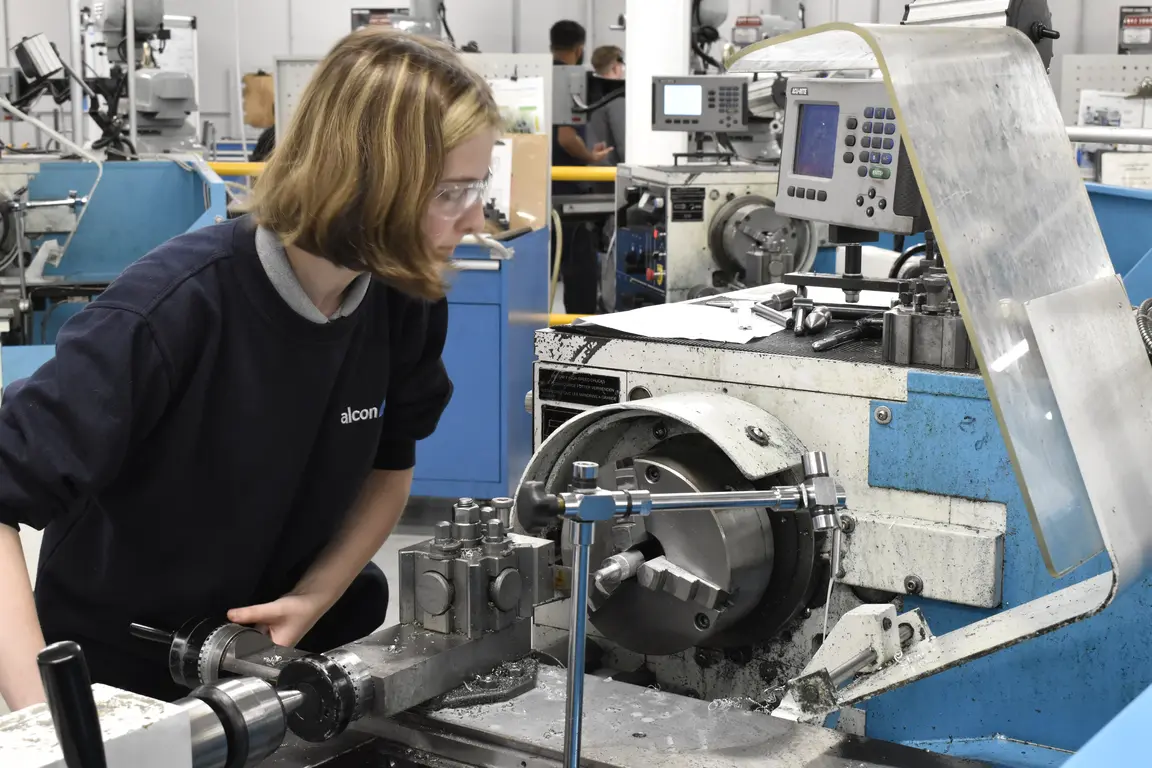
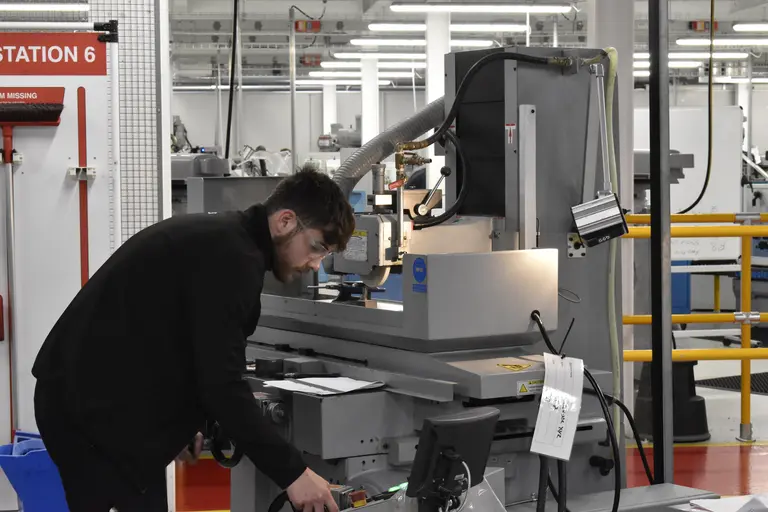
And if you'd like to see the equipment and facilities behind this training for yourself, take a look at the Tech Hub.
FAQs
An engineering operative trained through Make UK can carry out fault location on mechanical, electrical, electronic or fluid power equipment, using recognised diagnostic and fault-finding techniques.
They can carry out maintenance activities, test equipment against defined schedules and procedures, and complete the repair work needed to restore it to service.
They can read and interpret job instructions, engineering drawings and specifications, and identify and manage hazards, risks and hazardous situations.
They understand maintenance planning and the safe working practices, procedures and environmental regulations that apply to their work, and they carry out quality checks on their own work as required.
Engineering operatives trained to this standard can work individually or as part of a team, with minimum supervision, and communicate clearly with colleagues, supervisors and other teams. They are responsible for the accuracy, quality and timely delivery of their work.
They work across the manufacturing and engineering sector, and the core skills transfer between servicing and maintenance roles and production or manufacturing roles.
Typical job titles: Servicing and maintenance operative and production/manufacturing operatives.
As an engineering operative apprentice, you’ll spend most of your time in the workplace, applying what you’re learning to real fault-finding and maintenance tasks.
You’ll attend the Make UK Tech Hub in Aston for weeks-long chunks of training (what we call block release), delivered over five periods, where you’ll build the practical and technical knowledge behind the Level 2 Diploma and Certificate in Engineering Operations.
By the time you finish, you’ll be able to carry out fault-finding and maintenance work safely and independently, read and interpret technical documentation, and understand the engineering environment and safety practices that keep a maintenance operation running.
You’ll also build key behaviours employers look for, including personal responsibility, working effectively in a team, clear communication, attention to quality and the ability to learn from feedback.
Employers can add specialist training in areas such as turning, pneumatics, MIG welding, CNC, milling, electronics, hydraulics and robotics at an additional cost per module.
Engineering operatives move into higher-level maintenance and technical apprenticeships, specialist trade roles, and, eventually, supervisory and engineering positions.
The programme typically takes 15 to 18 months, with a minimum duration of 12 months.
Exact timings depend on prior experience, occupational role and an assessment of your prior learning and knowledge.
Training is split between your workplace and block release periods at the Make UK Tech Hub. The block release schedule is confirmed well in advance so your employer can plan around it.
Before moving to End-Point Assessment (EPA), your employer must confirm you’ve completed the mandatory qualifications, achieved English and maths at Level 2, and built a reflective portfolio of evidence against the standard.
End-point assessment takes around three months and consists of a practical skills observation in your normal workplace, plus a professional discussion supported by your portfolio.
This qualification is for new entrants starting out in maintenance, servicing or production roles, and no prior experience is expected.
Apprentices who are practical, methodical and keen to work out why something isn't working will get a strong grounding across mechanical, electrical, electronic and fluid power maintenance.
Applicants will need four GCSEs at grade 3 or above, including Maths, plus English at grade 2 or above. Anyone still working towards those grades can study towards them during the programme, and apprentices under 18 without grade 4s in English and maths will complete a booster course (Functional Skills Level 1) in both within their first nine months.
The Engineering Operative – Level 2 apprenticeship is government-funded through the Growth and Skills Levy, with a funding band for this programme of £10,000.
If your business pays into the Growth and Skills Levy, training costs are drawn from your levy account.
If your payroll is under £3 million a year, you don’t pay the levy. The government covers 95% of training costs and you contribute 5% of the training fee plus the apprentice's wage, which must be in line with the national apprenticeship wage.
Optional modules are charged separately, at £950 per module, and are agreed with your employer before the programme starts.
Find out more about how funding works here.
Ready to take the next step?
For employers
If this sounds like the right course for your business, the next step is to talk to us about your specific needs and how taking on an apprentice engineering operative works.
You can find out more about the full process, and learn how it works for employers like you from your first enquiry to your apprentice starting work.
The best way to answer all your questions is to visit our Tech Hub in Aston, where you can see how the training works for yourself before making a commitment.
If you're still weighing up whether an apprenticeship is right for your business, see why employers take on apprentices.
For learners
If you’re keen to pursue a career in maintenance or engineering operations, find out how to apply and what to expect from the process.
Find out what training at the Tech Hub is really like, with stories from apprentices who were once in your position.
Not sure if welding is right for you? See what other programmes are available to you.
If you're a learner deciding whether this route is for you, read why an apprenticeship could work for you.