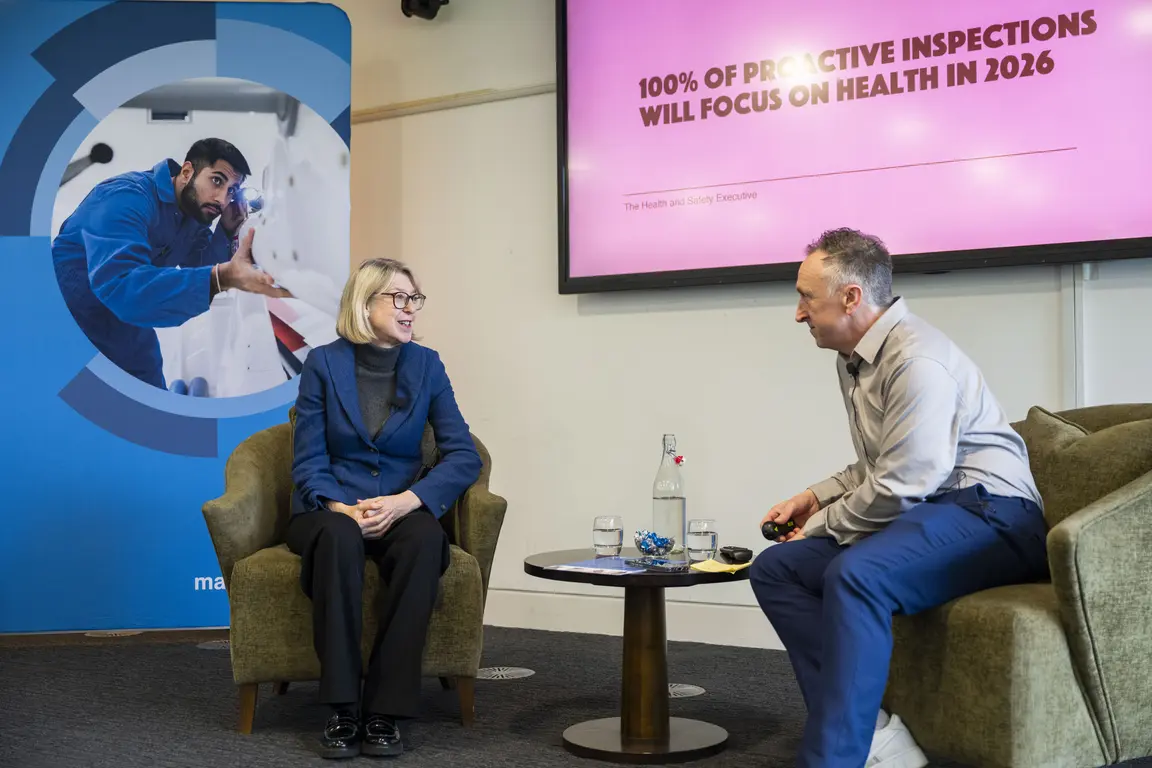
Why the HSE is focusing on health and what that means for you
02.04.2026
For decades, the UK has made significant progress on workplace safety. Fatal accidents have reduced, serious incidents are better controlled, and most organisations now have mature safety management systems in place.
But health tells a very different story.
Work‑related ill health continues to rise, driven by long‑term exposure, musculoskeletal disorders, fatigue and stress. These issues build quietly over time until absence increases, productivity drops, and problems become harder (and more expensive) to fix.
That’s why the Health and Safety Executive (HSE) is sharpening its focus on health.
From acute incidents to chronic risk
Traditional safety risks are often immediate and visible. A fall from height, a machinery incident, or a fire risk is usually obvious, time‑bound and investigated quickly.
Health risks behave differently.
Exposure to dust, noise or vibration, repeated manual handling or prolonged screen use rarely cause instant harm. Instead, damage accumulates gradually before symptoms surface. By the time we see the impact, people may already be injured, disengaged, or struggling to stay in work.
The HSE’s shift reflects this reality. Preventing work‑related ill health requires a different mindset: one focused on early intervention, consistency and review, not just incident response.
What this shift means in practice
For employers, the focus on health doesn’t mean new rules or a sudden change in legal duties. The fundamentals remain familiar:
- identify health risks
- put controls in place
- train people to work safely
What is changing is the expectation of confidence. HSE’s interest is increasingly in whether arrangements are:
- effective in practice
- consistently applied across teams and sites
- understood by the workforce
- reviewed and improved over time
In other words, it’s no longer enough to show that assessments exist. Organisations need to demonstrate that health risks are being actively managed, not passively documented.
Why health can feel harder to manage than safety
Many organisations assume health risks are “under control” because:
- assessments have been completed
- training has been delivered
- no one is raising concerns
But health risks are often normalised. People adapt to discomfort. Managers focus on keeping work moving. Early warning signs are missed because nothing feels urgent.
This is one of the reasons health outcomes lag behind safety performance. Without visibility, review and leadership attention, risk management becomes static.
What do organisations need to do?
The HSE health shift is not about catching employers out. It’s about preventing long‑term harm and keeping people healthy and productive at work.
For many organisations, this is a useful moment to step back and ask:
- Are we confident in our current health controls?
- Can we evidence how they work in practice?
- Do leaders have visibility of health risks in the same way they do safety risks?
These are the questions driving the next phase of the workplace health conversation.
For more information on how Make UK can support on developing healthy workplaces – visit this page: healthy workplaces | Make UK