
What senior leaders get wrong about wellbeing (and how to fix it)

27.05.2026
Most senior leaders want to do the right thing when it comes to employee wellbeing.
But across many organisations, there’s a clear disconnect between what leaders believe is happening and what employees actually experience.
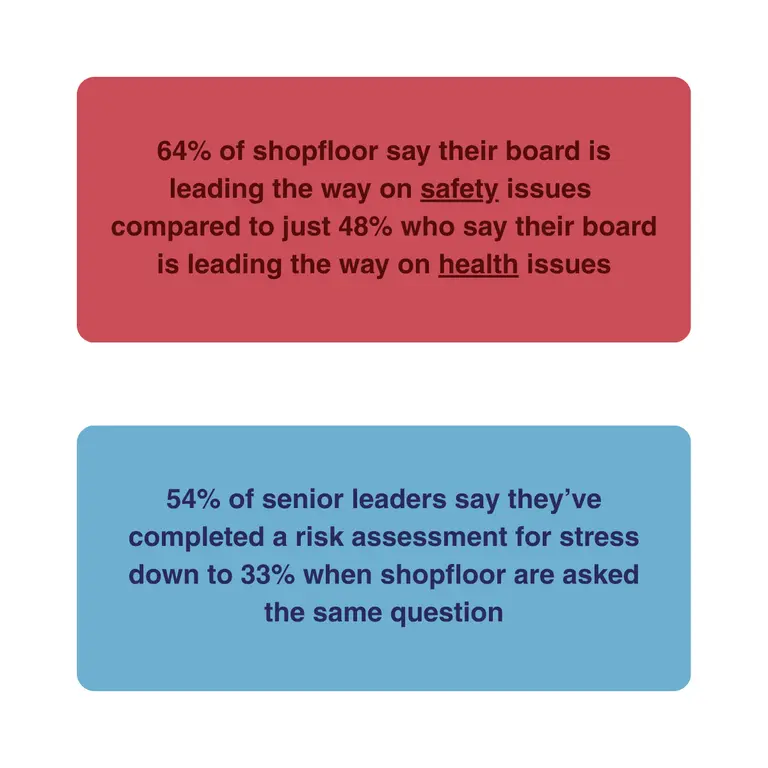
Make UK’s State of Wellbeing research and report highlights this gap. While many organisations are taking steps to improve health and wellbeing, it’s not always experienced consistently across the workforce.
It’s well understood that workplace wellbeing directly impacts employee engagement, productivity, retention, absence levels and overall business performance. So that disconnect matters.
The impact of senior leaders
Wellbeing is shaped by the same things that drive every other business outcome:
- what leaders prioritise
- what gets measured
- where time and investment are directed
Senior leaders often have greater influence over organisational culture and behaviours than any other group within the business.
Even well-designed initiatives can lose momentum if they’re not visibly supported at the top. Equally, relatively small interventions can gain traction quickly when leaders actively engage.
Yet, senior leaders do not always recognise the extent of their influence or the impact their behaviours have across an organisation. Take a common example. A CEO who regularly works long hours and is last to leave may unintentionally reinforce a culture of presenteeism, where long hours are seen as the expectation, rather than a choice.
These signals are often unintended but they’re powerful. That’s why leadership is often the single biggest lever for improving wellbeing outcomes.
Three common assumptions
Despite good intent, there are a few common assumptions that can limit the impact of wellbeing initiatives.
“We’ve got policies, so we’re covered”
Policies are important, but they don’t guarantee consistent experience.
Without visible leadership support and regular reinforcement, policies can exist on paper while day-to-day reality looks very different.
“Wellbeing sits with HR”
Technical knowledge of stress risk assessments, employment law and related compliance requirements rightly sits within Health & Safety and HR. However, the success of workplace wellbeing initiatives is heavily influenced by the visible commitment of senior leaders.
When wellbeing is viewed solely as a functional responsibility rather than a leadership priority, it is far more likely to be deprioritised when competing pressures and business demands arise.
“If no one complains, it must be fine”
One of the biggest challenges with wellbeing is that issues aren’t always visible.
If you asked organisations about their biggest risks, they might point to the global economy, supply chains or operational reliability. Yet the data consistently shows that one of the biggest costs to businesses is presenteeism.
“Presenteeism occurs when employees are physically present at work but, because of illness or other medical conditions, are not fully functioning.” (Widera, E., Chang, A. and Chen, H.L. (2010) Presenteeism: A public health hazard, Journal of General Internal Medicine, 25(11), pp. 1244–1247)
Without actively seeking feedback, it’s easy to assume things are working when they’re not.
At the same time, expectations are changing. Employees, particularly newer generations, are more likely to expect openness, support, and visible commitment from leadership.
Why these assumptions undermine impact
Taken together, these assumptions can create:
- A visibility gap - Leaders believe initiatives are landing, while employees experience something different
- Inconsistent experiences - Wellbeing varies across teams depending on local leadership behaviours
- Erosion of trust - When commitment isn’t visible, initiatives can feel superficial and over time, this makes it harder to sustain engagement and even harder to introduce new initiatives successfully.
How leaders can create impact
Senior leaders don’t need to become wellbeing experts, but they do need to use their influence deliberately.
Here are three things that leaders can do tomorrow that will make a big difference:
1. Care
To properly support any workplace initiative, leaders need to be genuinely invested in it.
If they aren’t, two things tend to happen.
- It’s difficult to consistently champion something you don’t truly believe in.
- It becomes obvious that their support is superficial.
All of this serves to quickly undermine the credibility of the programme.
Why leaders care will differ from person to person. Their motivation may be moral, legal, financial or operational. Ultimately, though, the reason matters less than the fact they genuinely care.
2. Demonstrate
Leadership commitment needs to be seen, not just stated.
This could include:
- actively participating in initiatives
- leading conversations about wellbeing
- role modelling healthy behaviours
When leaders visibly engage, it signals that wellbeing matters.
3. Be consistent
Organisations wouldn’t abandon other critical business activities when priorities shift or pressures increase. Workplace health and wellbeing should be no different.
That means:
- regularly reviewing wellbeing data
- asking the same questions you would of any other risk or performance area
- using insight to guide decisions and investment
Consistency is what shifts wellbeing from a “nice to have” to a core part of how the organisation operates.
A question for you
In most organisations, culture doesn’t come from policy. It comes from leadership behaviour. In that way, senior leaders shape how people experience work.
If you asked your workforce how visible leadership commitment to wellbeing really is, what would they say?
If you’re not sure, an employee wellbeing survey can help answer that question and highlight where to focus next. For more information, please contact us: [email protected].