Labour Party Conference 2026: what manufacturers need to know

It has been a difficult year for manufacturers. Energy costs remain high and employment costs are rising, while uncertainty continues to weigh on investment. There was plenty riding on this year’s Labour Party Conference.
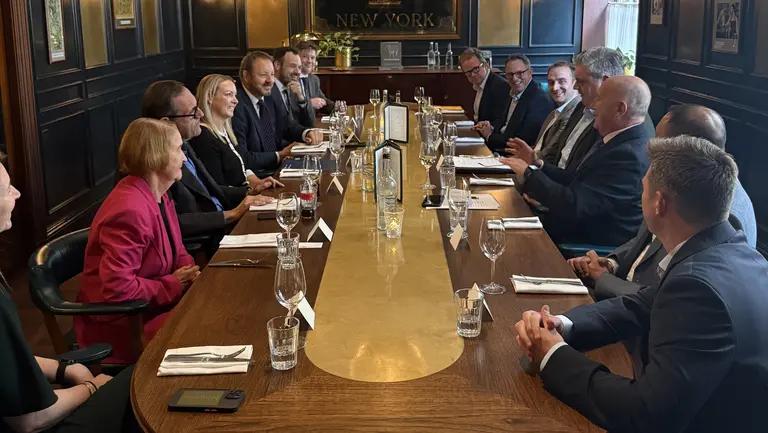
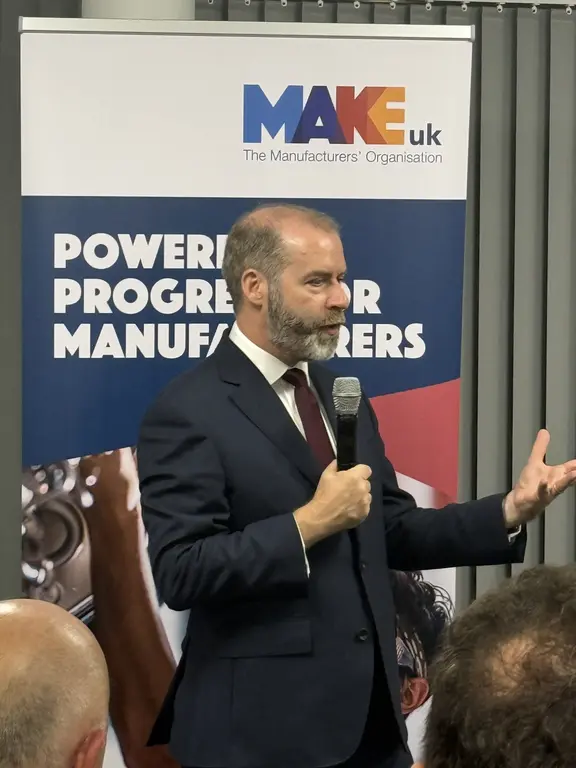
We went in with one clear priority: making sure those pressures were heard directly by Government. Through Labour’s Business Day and our events with Electrify Industry, including the Great British Manufacturing Reception, an aluminium industry lunch and a member roundtable with Liam Byrne MP, we brought manufacturers together with ministers and parliamentarians to discuss what practical reindustrialisation should look like.
This was a noticeably different Conference. Prime Minister Andy Burnham’s arrival at the top of Government has brought a greater emphasis on reindustrialisation and public investment. Many across the sector will welcome that. The question is how much of the change in tone translates into change on the ground.
What did the Prime Minister say on energy and Europe?
On energy, the Prime Minister appears to have heard the message from manufacturers, committing to bring UK energy costs in line with neighbouring European countries.
What is less clear is whether the Government has recognised the urgency. A ten-year timeframe is simply not bold enough. Ten years is too long for manufacturers facing the highest industrial power prices in Europe, and one in four is either already offshoring activity or actively considering it.
Europe was always going to be a hot topic at the conference. It was announced that the Government will use the next UK-EU Summit to pursue further cooperation and set out options for the longer-term relationship.
The EU remains the UK’s largest trading partner and many manufacturers would welcome a closer relationship. We will continue calling for progress on Emissions Trading Scheme linkage and want to see the practical barriers exporters face reduced. But as businesses make decisions about where to invest, they also need clarity on what the UK’s future relationship with the EU will actually look like. We will be doing significant work on this between now and the Summit, reported to be 20 November.
What did the Chancellor say on growth, AI and skills?
The Chancellor John Healey paid plenty of attention to advanced manufacturing, putting it at the centre of his growth agenda and talking about a “new age of industrialisation”. That was backed by the headline £300 million Rolls-Royce investment and a wider focus on using the National Wealth Fund to support growth.
AI is part of the Chancellor’s vision, with him going so far as to call it “the greatest innovation of our time”. No one doubts the opportunity, but our research shows how far manufacturing still has to go: just 2% say AI is widely embedded across their operations, while more than half cite skills shortages as the biggest barrier to adoption.
That makes the focus on skills particularly important. We were pleased to hear about additional support for locally led apprenticeship services and the return of the Union Learning Fund, with a focus on helping workers harness AI. But these initiatives need to work with employers if they are going to make a difference on the factory floor.
The problem is that improving the skills pipeline is only half the equation. Businesses also need the confidence to hire and train people. The cost of employing people is already rising, and another National Living Wage increase is due next April. That comes on top of the wider pressures manufacturers are already carrying.
What did the Business Secretary say on industrial strategy and employment rights?
The Business Secretary Jonathan Reynolds was speaking our language on reindustrialisation. His message was simple: Britain cannot keep generating great ideas only to see other countries manufacture and scale them.
We have always backed the ambition of the Industrial Strategy. The problem, again, is delivery. More than half of manufacturers have yet to see any benefit from it. The Business Secretary pointed to the expanded Growth Guarantee Scheme and additional British Business Bank capital, but the commitments are still not translating into finance at the pace or scale manufacturers need.
The Business Secretary was also emphatic on steel and automotive. For us, that is particularly close to home. UK Steel is part of the Make UK family, and reindustrialisation has to recognise the industrial capability we already have, not just the sectors we want to build for the future.
As expected, there was plenty of reference to the Governments employment rights agenda, including bans on zero-hours contracts and fire and rehire. Manufacturers are not arguing against good employment rights. But they are worried about the cost and complexity of the reforms.
We have already secured an important change, with the Government moving away from day-one unfair dismissal protection in favour of a six-month qualifying period There is still, however, a great deal to get right in implementation.
What comes next?
It certainly appears that reindustrialisation is central to the Government’s economic agenda. We welcome that. But, as ever, the devil will be in the detail, and some of the targets we heard at Conference are simply not ambitious enough.
The next real test comes at the Autumn Budget on 28 October. We have set out our priorities and will be looking closely at what it does on industrial energy prices and the cost of employing people. Thank you to everyone who has contributed evidence and helped us make the case for our sector.
Warm words are no longer enough. We need action.
- The Times: John Healey must match words with action, business chiefs warn
Stephen Phipson was quoted on the pressures facing manufacturers and the need for action at the Budget. - The Telegraph: Healey’s dream of re-industrialising Britain is a fantasy
Stephen Phipson set out the impact of energy costs, employment regulation and business rates on manufacturers’ ability to invest. - The Yorkshire Post: High energy bills, skills shortages and rising employer costs are holding manufacturers back, says Robert Halfon
Robert Halfon set out the conditions manufacturers need to invest, recruit and grow. - Times Radio: Watch Verity Davidge, Director of Policy and Public Affairs at Make UK, on Times Radio discussing what Labour Party Conference means for manufacturers.
- BBC Business Today: Verity Davidge also appeared on BBC Business Today to discuss the challenges facing manufacturers and the Government’s reindustrialisation agenda. The programme is no longer available to watch online.